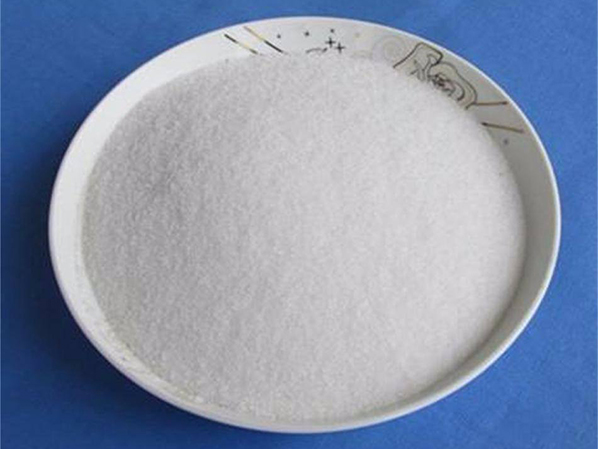
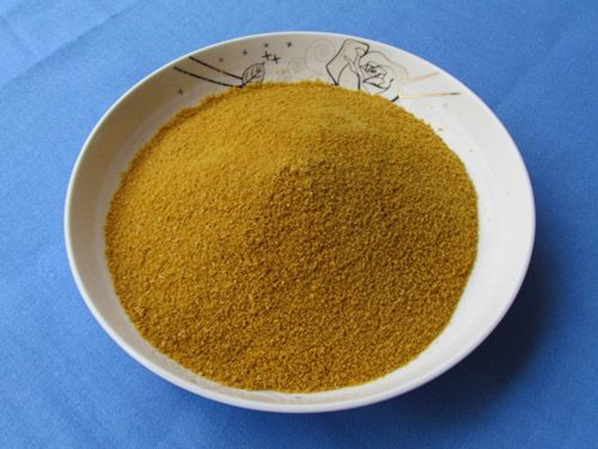
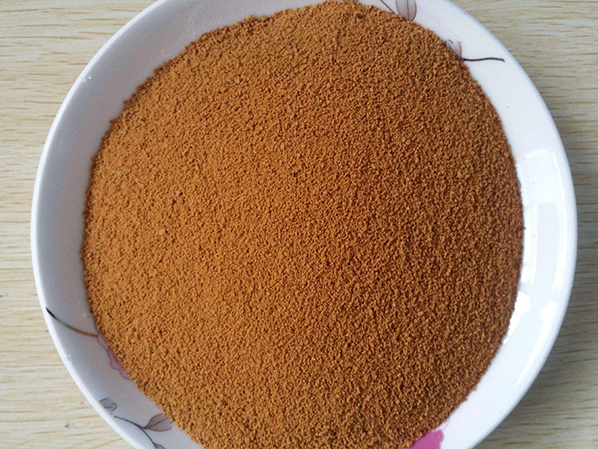
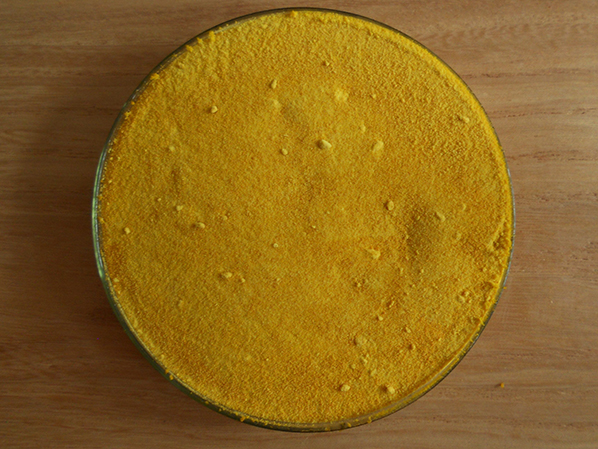
Flocculants can be divided into inorganic flocculants and organic flocculants according to their chemical composition. The inorganic flocculant further comprises an inorganic coagulant and an inorganic polymer flocculant; the organic flocculant further comprises a synthetic organic polymer flocculant, a natural organic polymer flocculant and a microbial flocculant.
The theoretical basis is: "aggregation" theory, the flocculant is mainly a group with positive (negative) electrical properties and some particles or particles with negative (positive) electrical properties in the water that are difficult to separate, reducing their potential, It is placed in an unstable state and its polymeric properties are used to concentrate these particles and separate them by physical or chemical means.
Agents commonly used for this purpose are referred to as flocculants. Flocculants are mainly used in the field of feed water and sewage treatment.
There are many kinds of flocculants, from low molecular to high molecular, from single type to complex type. The general trend is to develop in a cheap, practical, non-toxic and efficient way. Inorganic flocculant is cheap, but it has adverse effects on human health and ecological environment. Although organic polymer flocculant is used in a small amount, the scum yield is small, the flocculation ability is strong, the floc is easy to separate, and the effect of removing oil and removing suspended matter is good. However, the residual monomers of such polymers have a "triad" effect (synchronization, carcinogenicity, mutagenicity), thus limiting their application range; microbial flocculants are convenient to use because of the absence of secondary pollution, and application prospects Seductive. Microbial flocculants will likely replace or partially replace traditional inorganic polymers and synthetic organic polymer flocculants in the future. The development and application of microbial flocculants is in the ascendant, and its characteristics and advantages have shown a broad prospect for the development of water treatment technology.
working principle:
The flocculation precipitation method uses an inorganic flocculant (such as polyaluminum chloride) or an organic anionic flocculant (such as polyacrylamide PAM) to prepare an aqueous solution into the wastewater, which will produce a compressed electric double layer to make the suspended particles in the wastewater. Loss of stability, the colloidal particles agglomerate each other to increase the particles, forming flocs, silk flowers. After the floc grows to a certain volume, it is separated from the aqueous phase by gravity, thereby removing a large amount of suspended matter in the wastewater, thereby achieving the effect of water treatment. In order to improve the separation effect, a coagulant may be added in a timely and appropriate amount. The treated sewage can basically reach the discharge standard in terms of color, chromium content, suspended matter content, etc., and can be discharged or used as refill water for artificial water injection and oil recovery.
Precautions:
The change of flocculating agent which causes the flocculation performance to decrease under bad conditions is generally called degradation, which is manifested by a decrease in molecular weight, a decrease in solution viscosity, a deterioration in flocculation performance or even failure. There are many factors that may have this effect. The higher the molecular weight of pam, the easier it is to produce these changes, and the more sensitive it is to the relevant factors. This problem must be taken seriously, otherwise the best flocculant will not achieve good results.
The high molecular weight of polyacrylamide is the basis for its good flocculation performance. However, the macromolecule of this flocculant is easily damaged by external factors, which greatly degrades its performance. The preparation and use of flocculants must be carefully prevented from occurring. The main factors leading to the decrease of the viscosity and flocculation efficiency of the pam solution are:
1. Mechanical action: High-speed agitation or strong mechanical shearing in solution can cause macromolecules to break.
2, rust and iron compounds: add a very small amount (such as 2mg / l) of iron compounds (such as fecl3), or a trace of rust powder in the pam solution, gently stirred to disperse, the viscosity and flocculation performance of the pam solution is greatly reduce.
3, the role of high temperature: pam macromolecules are very sensitive to high temperature, such as 0.1% pam solution at 80 ° C for 4 hours, the molecular weight decreased from 21 million to 7.6 million, placed at 50 ° C also dropped to 16.9 million; molecular weight is 1050 Ten thousand pam, after dropping at 80 ° C for 4 hours, the molecular weight dropped to 3.3 million. For example, at 30 ° C, the molecular weight drops very slowly. If the original molecular weight of pam is very low, such as 3.7 million, there is little degradation by heat.
4, the effect of coexisting impurities: if there is suspended impurities in the pam solution will reduce its viscosity. Inorganic ions, especially high-valent ions, also have a large effect. For example, the viscosity of a pam solution is 191 centipoise. After the addition of nacl containing na+100 mg/l, the viscosity of the solution drops to 140, and after adding cacl2 containing ca2+100 mg/l, the viscosity drops to 30 cps.
5, other: ultraviolet radiation will cause rapid degradation of pam, strong exposure for 4 hours can make the molecular weight of pam from 18 million to 10 million, the presence of oxidants in the solution also accelerate degradation.
The main factors affecting the flocculation effect:
The factors affecting the flocculation effect are various, mainly including the type, concentration, dosage of flocculating agent, stirring condition during coagulation treatment, pH value, temperature and its changes, etc. Different countermeasures should be adopted according to specific conditions.
1. Types and dosages of flocculants: Different flocculants should be used for different wastewaters. The amount of flocculant affects the flocculation effect to a large extent. Excessive and insufficient will lead to the dispersion and stability of the sol particles. Therefore, the optimum dosage should be determined through experiments.
2. Effect of stirring and reaction time: After a certain flocculant is added to the wastewater, the flocculant should be quickly and uniformly diffused into the water. After the flocculant is fully dissolved, the resulting colloid will form a lot of tiny scented flowers after contact with the original colloid and suspended matter in the water. This process is also called mixing. The mixing process requires intense turbulence in the water stream, allowing the agent to mix well with the water in a relatively fast period of time, which typically takes a few seconds to 2 minutes.
3, the impact of ph value, alkalinity: ph value has a great impact on flocculant operation, so when the wastewater is flocculated, it must pay full attention to its effective pH range. The limitation of the pH value of the organic polymer flocculant is not strict, but the low pH value has a great influence on the flocculation effect of the flocculant. The inorganic flocculant is sensitive to the pH value of the wastewater. Since the hydrolysis reaction of the flocculant continuously generates hydrogen ions, the hydrolysis reaction is sufficiently maintained.
4, the effect of temperature: water temperature has an effect on the flocculation effect, the hydrolysis reaction of inorganic flocculant is endothermic reaction, the water temperature is not conducive to the hydrolysis of flocculant, the viscosity of water is also related to water temperature, if the water temperature is low, the viscosity of water is large The Brownian motion of the water molecules is weakened, which is not conducive to the destabilization and flocculation of the colloidal contaminants in the water, and thus the formation of flocs is not easy. Therefore, the amount of flocculant used in winter is higher than in summer. The increase in temperature is conducive to the collision between the colloids, but the temperature exceeds 90 degrees Celsius, which makes the flocculant aging or decompose to produce insoluble matter, but reduces the flocculation effect.
Conclusion
There are many kinds of flocculants, from low molecular to high molecular, from single type to complex type. The general trend is to develop in a cheap, practical, non-toxic and efficient way. Inorganic flocculants are cheap, but have adverse effects on human health and the ecological environment. Although organic polymers are more expensive, the amount of flocculants is less, the scum yield is less, the flocculation ability is strong, the flocs are easy to separate, and the oil is removed. In addition to the effect of suspended solids, there is generally no secondary pollution, easy to use, and attractive application prospects.



 phone:
 Cellphone:
 Q Q:
Q Q:
 Mailbox:
 Address: